Author, Historian, Theologian
Welcome! I am a pastor and author who lives at the intersection of faith, life, and history. My writing seeks to connect us all to the victories and mistakes of the past so we can see where we are going in the future.
Sign up for exclusive updates, advanced reader opportunities, behind the scenes insight, and to find out other ways that my writing can serve you!
New September Release!
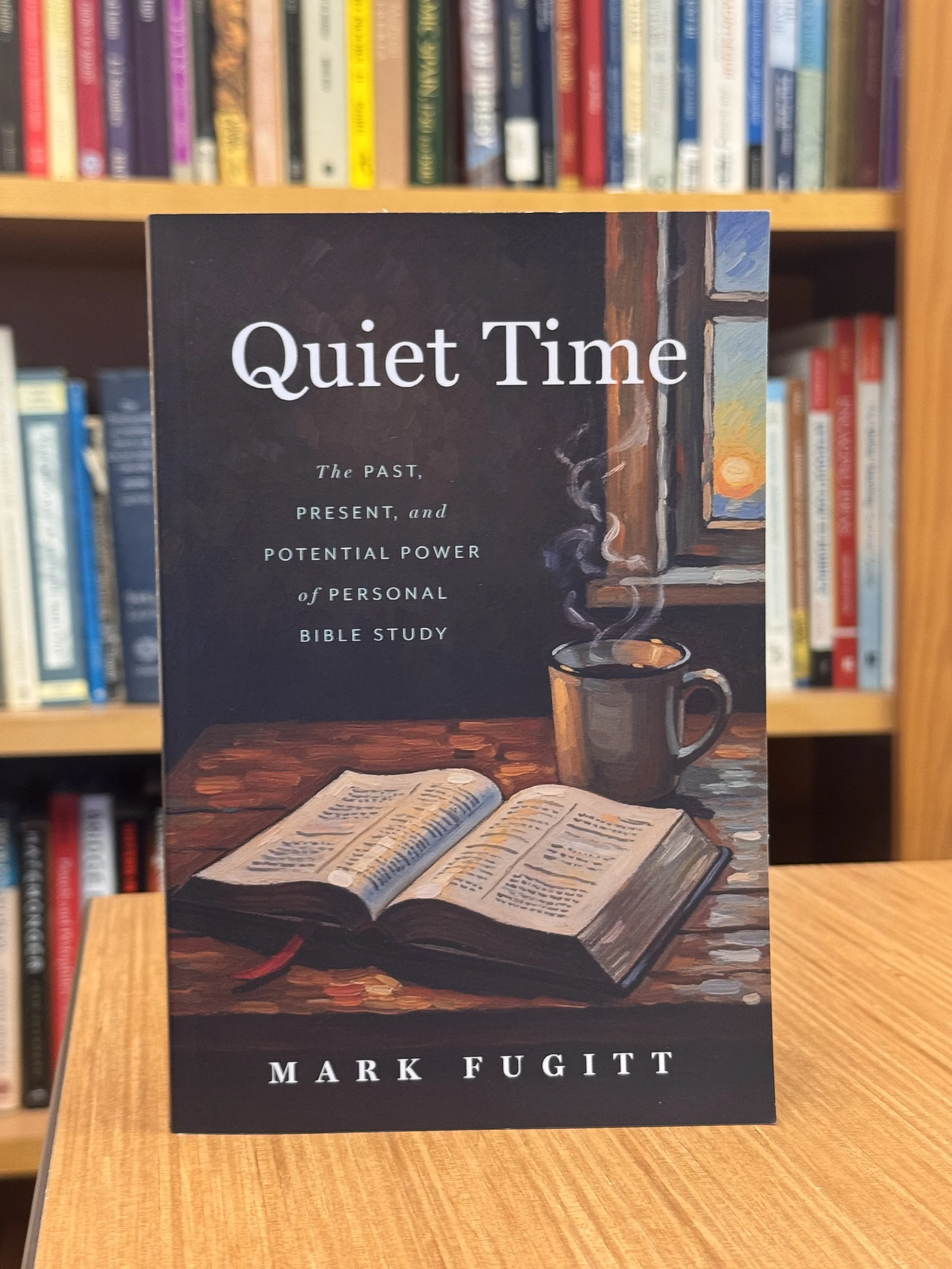
Quiet Time
Does nearly unlimited access to Scripture make us better Christians? Not necessarily. Past Christians often didn’t have Bibles like we do, yet we are told that every serious Christian should be spending time reading it today. Does that mean that they couldn’t be as close to God as us, or that personal Bible study is just a cultural fad today? How did our spiritual ancestors keep Scripture in their hearts without holding it in their hands? Explore how personal Bible study grew to become the primary spiritual discipline and why it is still relevant today.
Praise for Quiet Time
“Mark Fugitt takes up the perennial question of why followers of Jesus should remain devoted to reading Scripture. His deep love for God’s Word is evident throughout the book, as is his conviction that spiritual formation happens within the worshiping life of the Church. As he puts it, ‘God designed Christians to grow in a garden rather than a flower pot.’
“Fugitt skillfully weaves together historical voices, showing how different eras of the Church approached Scripture with their own challenges and expectations. This brief historical journey helps readers see that our struggles with Bible reading are not new, and that Christians across centuries have sought to remain faithful to God’s Word in changing contexts.
“He also offers a hopeful vision for today’s Church. Though we do not walk with the incarnate Christ, we can dwell in the riches of the living Word through the Spirit’s presence. Fugitt reminds us that ‘drawing close to God is good for mind, body, and spirit’ (Matt. 22:37), and that Scripture is God’s gracious means of restoring communion with him. In this way, he invites readers to rediscover Bible reading not as a duty but as a pathway into life with God.”
—Dr. Jennifer Freeman, Professor of Christian Formation, College of the Ozarks
“I’m grateful to Mark Fugitt for this patient, generous, irenic, and practical book. It walks Protestants through a potted history of church tradition with both conviction and charity. It is unafraid to learn from any believers, past or present, who have longed to hear the Lord speak through his inspired Word—and who have asked how any of us might do so with faith, hope, and love. In a time of biblical illiteracy, the task of renewing catechesis and a love for Scripture in the pews is a wonderful project and one we should beg the Spirit to indwell, equip, and animate with the power of Christ. As I finished this book, I thought to myself: Quiet time is dead. Long live quiet time!”
—Brad East, PhD, Associate Professor of Theology, Abilene Christian University
“Christians have long been encouraged to spend time in God’s Word, but few stop to ask how this practice developed across the history of the church. In Quiet Time, Mark Fugitt offers a compelling and accessible exploration of the past, present, and enduring value of personal Bible study. By tracing how generations of believers engaged Scripture—even when access was limited—Fugitt reminds us of the incredible gift we hold in our hands today. This book will deepen your appreciation for Scripture and inspire you to approach your time in the Word with renewed commitment.”
—Naomi Vacaro, Founder of Wholehearted and author of Quiet: Creating Grace-Based Rhythms for Spending Time with Jesus
“The history of Bible study is a very deep topic with a lot of different opinions and directions. We must be careful to ‘rightly divide the word of truth.’ I appreciate Quiet Time’s challenge to ‘read, meditate, pray, and contemplate.’”
—Danny Jones, Bible Study Leader and Deacon
“Quiet Time is a wise and measured journey through the history of personal Bible reading and devotion. Mark Fugitt shows himself to be open-hearted toward believers in other cultures and eras, eager to learn from their practices, while never losing sight of the extraordinary privilege we enjoy today with Scripture so accessible and so many tools available to help us understand and internalize God’s Word. Historical research and spiritual reflection, held together beautifully.”
—Trevin Wax, Vice President of resources and marketing at the North American Mission Board and visiting professor at Cedarville University, author of The Gospel Way Catechism and The Thrill of Orthodoxy

Lost Shepherd: What Believers Once Knew About Psalm 23 that the Modern World has Forgotten
Available now from Leafwood Publishers.
“The Twenty-third Psalm commends itself to the heart of the believer by its own internal excellence.” John Stevenson (1850)
“There’s a reason so many people grow up memorizing Psalm 23. It is certainly one of the great works of poetic literature and one of the great statements of God’s faithfulness, but with that familiarity can come a loss of its real power. We forget what we assume we know. With his emphasis on history and careful interpretation, Mark reminds of what is too often overlooked, and helps us again receive the good news of the shepherd before us.”
—Chase Replogle, pastor, host of The Pastor Writer podcast, and author of The Five Masculine Instincts
“We skim over Psalm 23 or recite it while thinking of anything else. To correct this, Lost Shepherd arrives to inform us of this Psalm’s rich heritage throughout church history. Through seeing how past believers in Jesus Christ read, understood, and relied on Psalm 23, the contemporary believer can only benefit and find edification, blessing, and joy. May this book serve all who will read it.”
—Jason G. Duesing, Provost and Professor of Historical Theology, Midwestern Baptist Theological Seminary
“Fugitt’s Lost Shepherd makes a compelling case for familiarity not leading to contempt. Rather, by working through each line of Psalm 23 and engaging with numerous different interpreters and interpretative approaches, Lost Shepherd renders in accessible form the true depth of a familiar passage. As a work of historical theology, Lost Shepherd draws upon leading Christian voices from diverse traditions to reveal how meaning shifts over time. As a work of devotion, it is a pleasing reminder that the Good Shepherd still roams the hills looking for those who stray, and that he continues to restore our souls. This is a scholarly yet pastoral meditation I anticipate many will be enriched by reading, and I look forward to directing many toward it.”
—Mark P. Ryan, Director of the Francis A. Schaeffer Institute, and Adjunct Professor of Religion and Culture, Covenant Theological Seminary, Saint Louis
“We do not study the Bible alone but with the whole people of God. Mark Fugitt invites us to read Psalm 23 with the church. This wonderful book helps us to rediscover Psalm 23 by showing us what it has meant to Christians throughout history. Readers will be introduced to the interpretative tradition of the church as an aid to help us hear afresh God speaking in this psalm. I am thankful for how Fugitt helps us read this psalm alongside the theologians of ages past.”
—Christopher R. Hanna, Department Chair and Professor of Theological Studies, Highlands College, and an associate pastor at Church of the Highlands
“Psalm 23 is among the best-known chapters of the Bible, even among nonbelievers. Therefore, it might surprise modern readers to know Christians in other times and places have interpreted these familiar words in a variety of ways. In this fascinating book, Mark Fugitt works through Psalm 23 line by line, engaging with pastors and theologians from across the Christian tradition, mining the riches of the church’s past for the sake of the church’s present flourishing. Lost Shepherd is a work of ‘historical pastoral theology’ that will be helpful to preachers and teachers of God’s Word and bless devotional readers of Psalm 23.”
—Nathan A. Finn, Provost and Dean of the University Faculty, North Greenville University
“Lest we live by the adage ‘familiarity breeds contempt,’ I invite you to read this intriguing book that connects the most well-known psalm in Scripture with the Good Shepherd, Jesus Christ. As a phrase-by-phrase exposition of this beloved poem, Lost Shepherd will push you to hear and sense Psalm 23 in a fresh and surprising way.”
—Gregg R. Allison, Professor of Christian Theology, The Southern Baptist Theological Seminary; Secretary, Evangelical Theological Society; author, Historical Theology, Sojourners and Strangers, The Holy Spirit (with Andreas Köstenberger), Roman Catholic Theology and Practice, and Embodiment
“Mark Fugitt’s Lost Shepherd is a rare delight. I was hooked after the first paragraph and wanted to know what I didn’t know. Fugitt leads his readers through this majestic psalm by engaging with historical translations of the text, such as those found in the Septuagint and the Latin Vulgate, and luminaries, such as Francis of Assisi and Augustine. He shows how these authors interpreted the text, and his own extensive pastoral experience and academic acumen are evident throughout. This book is not only educational; it deeply connects the reader to the Good Shepherd. What more can one ask from a book?”
—Phil Halstead, PhD, Senior Lecturer, Carey Graduate School, Auckland, New Zealand

"For the Christian community, history is the stage on which the drama of redemption is being displayed"
— Michael Haykin